
Color CAN Change Everything
NEWSLETTERSHOME IMPROVEMENT
Color CAN Change Everything
May 2026 Newsletter | Kenneth Bargers
a new coat of paint is transformative
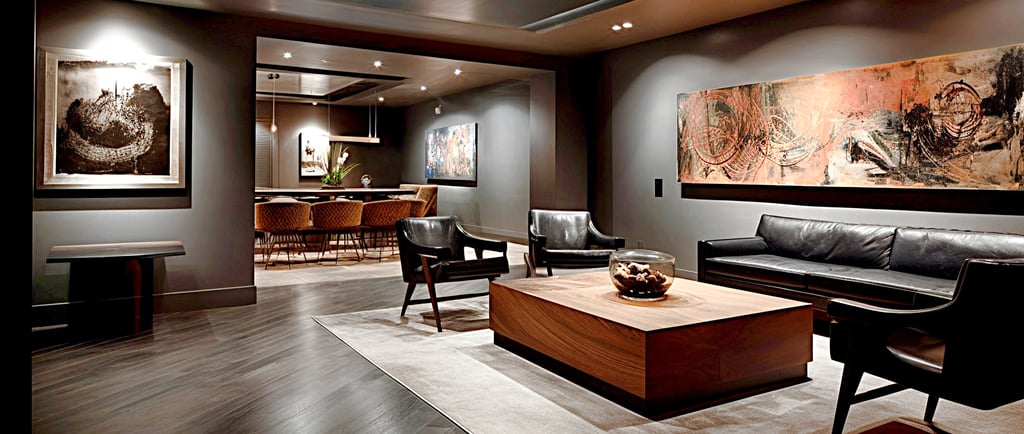
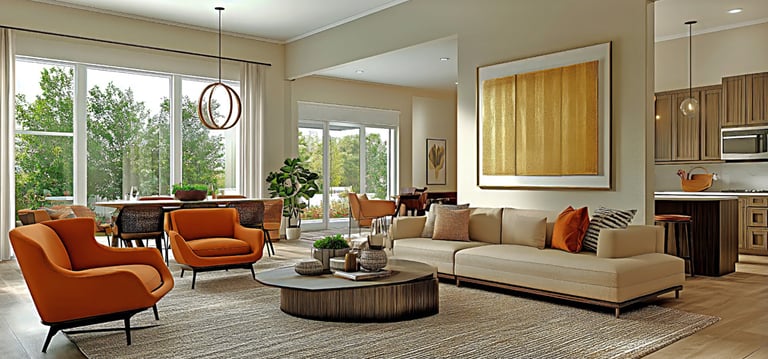
Do you have boring or dated walls? The transformation of a newly painted room can make a statement not only in the look of your home but the value-added ROI of your efforts. Painting is also one of the forgivable inexpensive updates that can easily be redone due to unsatisfactory results. Your materials are vastly insignificant compared to the labor of love and time required to complete this upgrade.
Paint can dramatically change the look of your home and bring new life to your interior with inviting color selections, whether bold or muted, featuring your personality and interior design taste. Your painting project can also lead to a domino effect. Take the opportunity to evaluate if you need to refresh, repair or replace the mountings, door hardware, registers, returns, light fixtures and flooring in the room.
But DIY Weekend Warriors beware - when it comes to painting speed is not your friend. Take your time to research and organize and you will exceed your expectations of the room you envision. So, whether you are a DIYer or more comfortable with hiring a professional painter consider the below topics as general guidance as part of your research for painting a room.
As always, if you are considering selling your home, please contact your trusted REALTOR to discuss the benefits of appealing neutral color selections with the goal of attracting a broad group of potential buyers.
THE POWER OF HUE
choosing and testing your paint color
This color is not what I wanted!... Do not be surprised or disappointed by your color selection. Several factors determine the color swatch in your room - lighting, room size, wall material, texture, etc. The best way to test your paint color is to paint a large patch on your wall. Lowe's Valspar Color Sample (half-pint) range from $6.75-$7.25 for a jar. Home improvement stores such as Lowe's and Home Depot offer these types of samples.
What is trending? Sherwin Williams offers their 2026 color of the year - Universal Khaki (SW 6150) from the Tailored and Timeless collection. Valspar's color of the year is Warm Eucalyptus (8004-28F). Behr's color of the year is Hidden Gem Smoky Jade (N430-6A).
ColorSnap Visualizer by Sherwin Williams is a cool feature. Take a picture of your room and use this app via your desktop or mobile to see the color in your room.
Type of finish to the paint... Whether you need flat, matte, semi-gloss or gloss, the sheen depends on your room's purpose and your goal. Is it for a bathroom, high traffic area, dark rooms such as media or basement, low/high moisture? Flat/matte finishes are most popular to hide wall imperfections but are not as durable. Semi-gloss and gloss finishes are low maintenance friendly and easy to clean but marks show more noticeably.
Also important is the paint base. Discuss with your home improvement paint department the advantages and disadvantages of latex, oil-base, odorless and environmental paint base.
ready to paint?
How much paint do I need? Using a primer as part of your prep work is key and will reduce the number of coats required for coverage. Many quality paints are infused with primer, and you may want to consider these products in place of a standalone primer. With a quality primer you should expect to use 1-2 coats of paint.
Determine your room size... Benjamin Moore offers this valuable calculator. Your paint expert at a home improvement store will gladly assist you with the number of gallons required for the square footage of your room.
Prepping the room... As I mentioned in the introduction your investment is largely a labor of love. Painting a room is manual labor intensive and requires patience and attention to details. Prepping the room requires your valuable time to protect its shell. With a well-prepped room, the painting will go smoothly, and you will take pride in the finished product.
Purchase and/or have all supplies in advance of the project such as paint, brushes, rollers, buckets, paint sprayer (if applicable), tarps, painter's tape, spackling paste, sandpaper
Remove all furniture
Remove window treatments
Remove all prints, paintings, wall decor
Remove all nails, screws
Remove all outlet covers, registers, returns
Patch all holes
Sand all imperfections including spackled areas to a smooth finish
Wash walls
Tape around all baseboards, windows, doors, ceiling lines, etc.
Lay tarp and tape edges to the floor for safety
Initiate your painting by cutting-in all corners and areas around taped areas with a small brush
Wait a minimum of 3 hours between coats of paint (will be considerably longer for oil-base)

Copyright © 2026 Kenneth Sells Nashville | Nashville Kenneth All Rights Reserved. All information deemed to be accurate but not guaranteed; Buyer's/Seller's Agent to verify all pertinent information.
KENNETH M BARGERS LIC 318311 (615) 512-9836 M kb@kennethsellsnashville.com E realestate@nashvillekenneth.com E kennethsellsnashville.com W nashvillekenneth.com W
ADARO Realty LIC 261466 (615) 376-1688 O 1187 Old Hickory Blvd, Suite 125, Brentwood TN 37027 A adarorealty.com W an agency of Crye-Leike Real Estate Services